Time Theming for Engineering Managers
In mature engineering organizations, established processes are the backbone of the work.
Engineering managers typically have recurring calendar events throughout the year: performance reviews, mid-year check-ins and calibration cycles. These are not one-off tasks; they are multi-week processes involving preparation, focus time for writing feedbacks and follow-ups.
Their daily routine continues as well: ceremonies, one-on-ones and retrospectives.
At the same time, there are other types of work in the basket: initiatives that require proactivity, planning and drive —working with stakeholders on projects, addressing tech debt or driving technical migrations. This requires protected time and mental energy: understanding the problem, discussing options, making decisions and following through.
What else could appear in an engineering manager’s calendar? Hiring, engineers moving teams (onboarding and offboarding), sick leaves and other things to take care of.
Some of these can happen unexpectedly, but many are known in advance and can be planned for.
During peak season, engineering managers tend to “act normal”, naturally prioritizing core ceremonies and one-on-ones while ensuring they meet the company’s cycle requirements. However, because strategic work rarely has a hard deadline, it gets pushed back. Week one becomes week two, then the following week. Suddenly, they realize that a critical initiative has barely moved in a month.
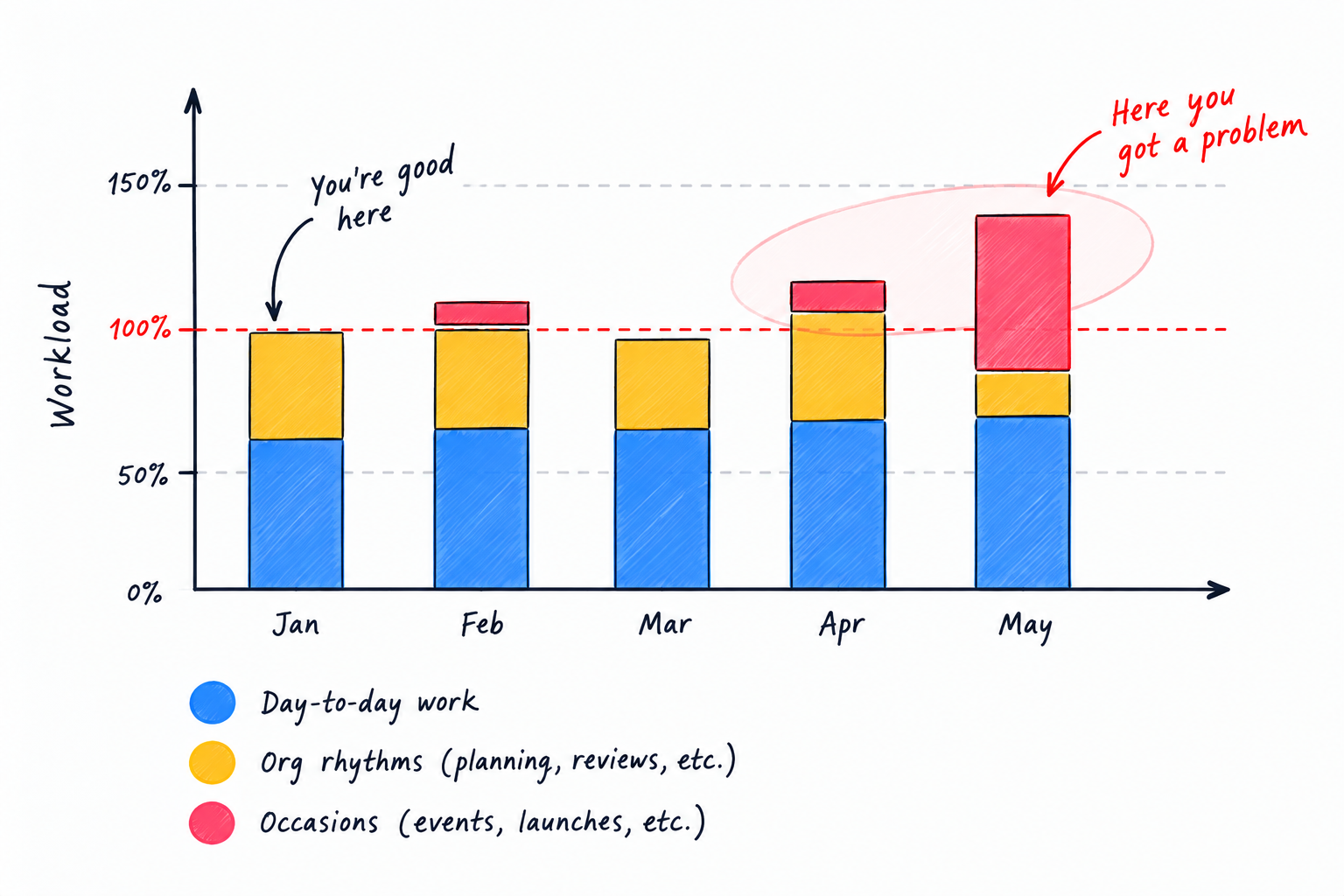
Stop pretending that everything is normal and there is just a bit more work!
Maintaining the same schedule and commitments during these periods is unrealistic. Instead, let’s accept that the calendar shouldn’t look the same throughout the year.
How can this be organized proactively?
One approach is to mark the calendar with different themes ahead of them. The general idea of time theming is to recognize the main focus of a period and deliberately adapt the schedule and commitments around it.
For example, with Q4 and the end-of-year performance cycle approaching, the theme is clear. During this period, managers dedicate time to calibrations, feedback and performance conversations. For a few weeks, this becomes a significant part of their job.
This shouldn’t be treated as an interruption to regular work. It is an important set of events that requires to structure time differently!
- Managers should set expectations with their teams. Engineers need to be ready to run ceremonies and make decisions without constant management presence. They should know what they can move forward themselves and when to escalate. These habits need to be built before the manager’s calendar becomes a bottleneck.
- EM shouldn’t suddenly become absent. Rotating facilitation of ceremonies in advance helps the team prepare and makes it easier to decide which ones require attendance.
- Sprint capacity should account for feedback writing and review conversations—for the team as well! Engineers also need time to focus on this. Reducing meeting frequency and blocking time for feedback naturally gives managers more time too.
- Relevant one-on-ones and regular check-ins can have a performance or development focus. Their frequency can be adjusted where appropriate, while keeping support available.
- Managers should review the initiatives they are driving: what must move, what can progress with minimal input and where a slower pace can be agreed on. Ownership or milestones may need temporary adjustments.
- Stakeholders need to clearly understand availability and priorities. If a project depends on engineering managers coordination or decisions, everyone involved should agree on how to handle that during this period.
By freeing up time for what matters during the theme, managers reduce the risk of keeping every meeting in the calendar while rushing the feedback and decisions that impact their team’s careers.
The same approach can be scaled to the entire year.
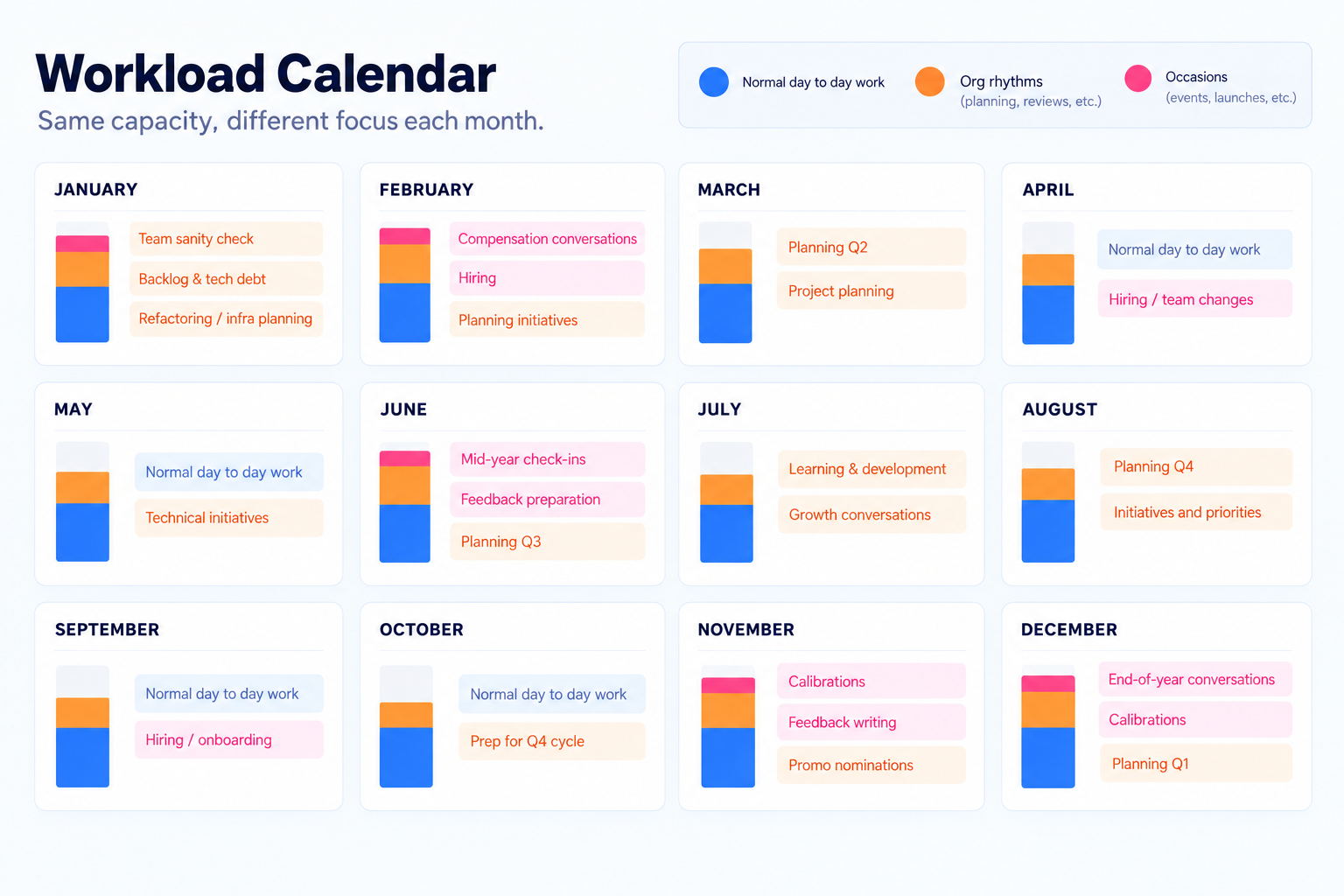
Beginning of the year: If this is a quieter month in the organization, it can be used for an “engineering sanity check.” Teams can review the backlog, tackle accumulated technical debt, plan targeted refactoring or upgrade infrastructure and agent workflows.
Mid-year: A quieter time in many regions. Depending on deliverables and availability, this could be a useful window for learning and development. Managers can discuss growth goals with their reports and make space for them to work on those objectives.
Quarterly planning: If a performance cycle is approaching, managers should factor it into objectives and timelines. It will require significant time and attention. Planning around these known constraints gives the team a better chance of delivering on its commitments.
The Takeaway
Months are not interchangeable. An engineering manager’s calendar and to-do list should reflect that.
Look ahead, challenge your routines and decide what can be paused, delegated or adjusted. These decisions should be made with the team before the busy period begins, while there is still time to prepare.